









Index
- How to get Verifactu for free?
- Free Verifactu Applications: What to Consider
- How free Verifactu software works
- Is it possible to use Verifactu for free? Main requirements
- How to Choose a Free Verifactu Platform
- Advantages and Limitations of Using Verifactu for Free
- How to Choose the Best Verifactu Invoicing Software for the Long Term
'/%3e%3cpath%20d='M13.6641%205.76325L30.0315%2018.448M50.9456%205.30859L31.8502%2019.8575L30.0315%2018.448M13.6641%2031.6784L30.0315%2018.448'%20stroke='white'%20stroke-width='2'%20stroke-linecap='round'%20stroke-linejoin='round'/%3e%3cpath%20d='M34.5781%2017.582L50.9456%2031.2216'%20stroke='white'%20stroke-width='2'%20stroke-linecap='round'%20stroke-linejoin='round'/%3e%3cdefs%3e%3clinearGradient%20id='paint0_linear_137488_197253'%20x1='12.75'%20y1='5.60216'%20x2='38.5997'%20y2='41.6392'%20gradientUnits='userSpaceOnUse'%3e%3cstop%20offset='0.161458'%20stop-color='%23FF8066'/%3e%3cstop%20offset='1'%20stop-color='%237756DB'/%3e%3c/linearGradient%3e%3c/defs%3e%3c/svg%3e)
The best content in your inbox
The imminent requirement to adapt invoicing to the Tax Agency’s anti-fraud regulations poses a crucial challenge for freelancers and small businesses. Given this reality, there is an urgent need to find free or affordable Verifactu software that ensures legal compliance without compromising operating margins. This digitization of record submission goes beyond a simple change in format, completely redefining how businesses interact financially with the government.
Fortunately, the latest updates to the Official State Gazette (BOE) and the extensions granted offer companies valuable time to choose their ideal software. Throughout this article, we will address the legal and cryptographic requirements stipulated by current regulations.
We will detail the structural functioning of these tools and the essential features that every invoicing system must include to ensure its validity and avoid hefty fines.
Start creating and issuing Verifactu invoices here
Open a free accountHow to get Verifactu for free?
Gaining access to a free Verifactu system has become a top priority for professionals seeking to optimize their financial management and comply with the Tax Agency’s new regulations without incurring additional costs that impact their profitability.
This type of software is specifically designed to meet the needs of micro-businesses, self-employed professionals, or entrepreneurs with low turnover. There is one main way to obtain a Verifactu system at no cost that ensures the legality of your processes.
Software platforms with "Freemium" plans
Opting for a free Verifactu program through an entry-level cloud service is the ideal alternative to start invoicing immediately under the new legal framework. These plans allow for the seamless issuance of invoices with their corresponding QR code, digital fingerprint (hash), and automatic submission to the AEAT, fully meeting the Tax Agency’s requirements for businesses that do not yet need complex accounting automation.
To start using any of these options, users must register, link their qualified electronic certificate, and configure their tax information. From that point on, the platform assumes technical responsibility for structuring the XML file in accordance with the Ministry of Finance’s requirements.
Choosing free Verifactu software is the easiest and fastest way to ensure strict regulatory compliance at zero cost. This decision allows freelancers and micro-SMEs to issue legal invoices and send them to the AEAT automatically, digitizing their business from day one without squeezing their margins.
Free Verifactu Applications: What to Consider
Before implementing Verifactu invoicing software—whether free or paid—it is essential to understand the regulatory framework governing it. Royal Decree 1007/2023 and Law 11/2021 on measures to prevent and combat tax fraud laid the groundwork for eliminating dual-use software (programs that allowed sales to be hidden). This affects all business owners and professionals who issue invoices, excluding those who already operate under the Immediate Information Reporting System (SII) or who are taxed under regional regimes such as TicketBAI in the Basque Country.
The official implementation deadlines set January 1, 2027, as the cutoff date for companies subject to corporate income tax, by which time their Verificatu invoicing software must be fully operational and sending records. On the other hand, July 1, 2027, is the deadline for all other taxpayers, primarily self-employed individuals and professionals under the direct assessment tax regime.
| Feature | Standard Invoicing | Verifactu Software |
|---|---|---|
| Legality 2027 | Completely illegal (subject to penalties). | Fully legal and approved by the Spanish Tax Agency (AEAT). |
| Data Integrity | The text can be modified after the fact. | Cryptographic seal (Hash) that prevents any alteration. |
| Traceability | None. There is no creation record. | Unalterable event log and submission to the IRS. |
| Visual format | Free-form. | Mandatory inclusion of QR code and legal text. |
Technical aspects of free Verifactu invoicing systems
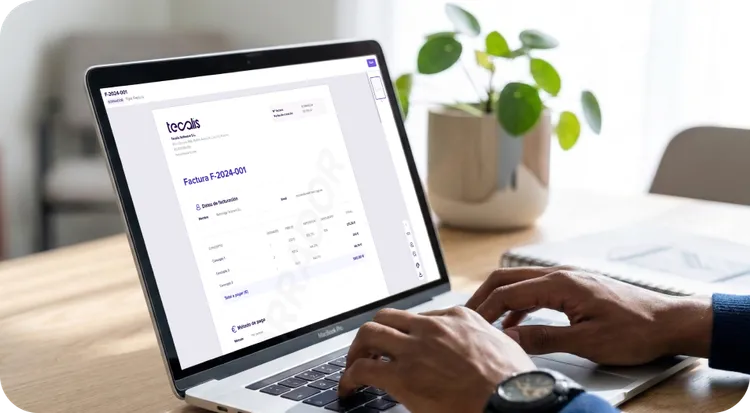
For the AEAT to validate a free Verifactu program and electronic invoicing systems as legal, they must strictly comply with a non-negotiable technical architecture. Always verify that your software meets the following technical requirements:
- Integrity and immutability: Each billing record for creation or cancellation must contain a cryptographic hash (SHA-256) that includes part of the hash from the immediately preceding invoice. If a past invoice is altered, the chain is broken and the system alerts you to the tampering.
- Traceability: The system must generate a hidden, tamper-proof event log that records who logs into the system, when an invoice is issued, or if any attempt is made to alter any system parameters.
- Advanced electronic signature: Records must be signed with a qualified electronic certificate to ensure non-repudiation and verify the issuer’s identity.
- Submission of records to the Spanish Tax Agency (AEAT): The platform must be able to connect via API with the Spanish Tax Agency to submit the invoice registration record at the exact moment of issuance.
- Mandatory QR code: Every PDF or paper invoice issued by the software must include a standardized QR code. This QR code contains the issuer’s tax ID number, series, number, date, total amount, and hyperlink. Additionally, if the system sends the data automatically, it must include the exact phrase: “Invoice verifiable on the AEAT’s electronic portal.”
- Retention and accessibility: Data must not only be processed but also securely retained in standard formats (XML, JSON, CSV), accessible and readable for a minimum of four fiscal years.
How free Verifactu software works
Understanding the workflow of a Verifactu invoicing system demystifies its complexity. Although cryptographic algorithms operate behind the scenes, from the end-user’s perspective, the process in good free software should be transparent and simple. Here is a step-by-step example of the issuance workflow to illustrate the typical operation:
- Document creation: The user logs into their online dashboard and enters the standard sales data: customer, description, taxable amount, and VAT.
- XML generation: Upon clicking "Issue," the software generates a structured data file (XML format) in accordance with tax authority specifications.
- Cryptographic seal: The system calculates the invoice’s hash, concatenates it with the previous one, and applies a timestamp.
- API connection and automatic submission: Using secure protocols (HTTPS/TLS), the software connects via a REST API to the AEAT’s Electronic Office and transmits the XML registration record.
- PDF and QR code generation: The tax authority receives the entry. The software then creates the final PDF by embedding the QR code and sends it via email to the client.
- Log entry: This entire process is silently recorded in the system’s event log.
This entire workflow occurs in milliseconds, demonstrating that using a well-optimized, free Verifactu program does not slow down daily business operations.
Discover the features of Tecalis’ electronic invoicing solution
Contact us and get started nowIs it possible to use Verifactu for free? Main requirements
The short answer is yes, it is entirely possible. Review the Verifactu software plans to see which one best suits your needs. However, to use the free Verifactu software, the user must meet a series of essential requirements:
- Have an active digital certificate: Whether you’re an individual or a business, this is the key element that allows the software to sign submissions on your behalf with the IRS.
- Internet connection: Since these systems require validating hashes and sending XMLs in real time, they operate in the cloud (SaaS). There are no free on-premise programs that work offline for this type of service.
- Accept volume limitations: Free plans are a marketing tool for software providers. Therefore, they typically limit operations to a maximum number of monthly invoices, registered customers, or concurrent users.
How to Choose a Free Verifactu Platform
If you’re going to entrust your business’s financial data to a third party at no cost, you must exercise thorough due diligence in your selection. First, you should assess the provider’s certification and declaration of compliance. The website must include an explicit, signed declaration guaranteeing that its software complies with the Verifactu Regulation (RD 1007/2023). Additionally, a good system allows you to upload your digital certificate in an encrypted format or use systems like AutoFirma, avoiding validation errors.
Second, insist on data portability from the very first moment you start using the invoicing system. The platform must allow you to export your product or service catalog, customer database, and invoice history in XML/CSV format for free. If your business grows and you need to migrate to paid software, your data should not be locked in.
Finally, evaluate the documentation support: since free plans typically do not include phone support, verify that they have a robust help center, FAQs, and video tutorials to guide you independently.
Start using Tecalis Electronic Invoicing today
Verifactu Platform with a free planIn short, even if the cost is zero, the responsibility for your invoicing remains yours. Making an informed decision based on security, genuine certification, and data ownership is the best investment you can make for your business—even when you choose not to spend anything.
Advantages and Limitations of Using Verifactu for Free
Opting for free platforms involves a clear trade-off between short-term benefits and long-term scalability risks. From a financial standpoint, it ensures strict regulatory compliance at zero cost. However, there is a risk that, if the business grows, upgrading to paid plans could become expensive. In terms of implementation, it offers a very low barrier to entry, making it ideal for new freelancers. The main limitation is the lack of human technical support for potential connection errors with the AEAT API.
Regarding functionality, it promotes effective digitization that finally eliminates the use of paper and Excel. On the other hand, it often lacks advanced API integrations with e-commerce platforms or CRMs. Finally, in terms of taxation, it ensures the perfect generation of the records required by the tax authorities. However, these basic versions do not typically automate tax form calculations or perform bank reconciliation.
Entrusting your business’s financial data to a zero-cost platform requires the utmost diligence. Choosing a free system should not mean sacrificing security: always ensure the provider has an official declaration of compliance and guarantees full data portability to avoid being locked in when your company needs to scale.

How to Choose the Best Verifactu Invoicing Software for the Long Term
Starting with free Verifactu software is a smart tactical decision, but any business with growth potential will eventually run into its inevitable functional limitations. The real leap forward happens when you realize that electronic invoicing isn’t just a legal obligation, but a lever for corporate digitization.
When it’s time to scale up, the focus should shift to unified enterprise platforms. You should look for solutions that go beyond generating a QR code and sending invoices to the tax authorities. Advanced software integrates:
- Generation of FacturaeE formats for B2G.
- Simultaneous compliance with Verifactu and the Crea y Crece Law (which requires the reporting of invoice payment statuses).
- Integration of electronic signatures for contracts and SEPA mandates within the same environment.
Notable here are comprehensive solutions that combine Tecalis electronic invoicing with signing tools like Tecalis Sign. While the invoicing module ensures Verifactu compliance (structured issuance and connection to the Spanish Tax Agency), the integration of advanced electronic signatures allows you to close the commercial cycle with contracts and SEPA mandates in a single environment.
By adopting a professional solution, you ensure perfect traceability, full automation of collections, native connection with the Public Administration, and, above all, the peace of mind that comes with expert technical support that protects your business from penalties.
Create and issue Verifactu invoices
Learn about our plansGlossary of Terms
- Verifactu: A verifiable invoicing system that meets the technical requirements of the Spanish Tax Agency (AEAT) for the automatic and secure transmission of records, preventing tax fraud.
- Cryptographic hash: An algorithm that generates a unique "digital fingerprint" for each invoice. By chaining it to the hash of the previous invoice, it ensures that the data is unalterable.
- XML: The structured data file format required by the Ministry of Finance to process and validate the information on each issued invoice.
- REST API: Communication technology that enables a seamless, secure, and real-time connection between the user’s invoicing software and the AEAT’s Electronic Office.
- Qualified electronic certificate: A mandatory digital credential that allows the software to sign records and irrefutably guarantee the identity of the person or company issuing the invoice.
- FacturaE: Standard electronic invoice format required for invoicing Public Administrations (B2G model)