







Index
- Electronic Signatures in Spain: What They Are and How To Obtain Them
- Best Electronic Signature Solutions And Tools In Spain
- Digital KYC/AML Onboarding In Spain and Electronic Signatures: Contracting
'/%3e%3cpath%20d='M13.6641%205.76325L30.0315%2018.448M50.9456%205.30859L31.8502%2019.8575L30.0315%2018.448M13.6641%2031.6784L30.0315%2018.448'%20stroke='white'%20stroke-width='2'%20stroke-linecap='round'%20stroke-linejoin='round'/%3e%3cpath%20d='M34.5781%2017.582L50.9456%2031.2216'%20stroke='white'%20stroke-width='2'%20stroke-linecap='round'%20stroke-linejoin='round'/%3e%3cdefs%3e%3clinearGradient%20id='paint0_linear_137488_197253'%20x1='12.75'%20y1='5.60216'%20x2='38.5997'%20y2='41.6392'%20gradientUnits='userSpaceOnUse'%3e%3cstop%20offset='0.161458'%20stop-color='%23FF8066'/%3e%3cstop%20offset='1'%20stop-color='%237756DB'/%3e%3c/linearGradient%3e%3c/defs%3e%3c/svg%3e)
The best content in your inbox
In the last decade, digital transformation has gone from being an option to becoming a business imperative. In this new era, electronic signatures in Spain have become the cornerstone of digital contracting. They are no longer just a convenient tool; they are a robust legal mechanism that allows companies to formalize agreements, close contracts, and operate with full legal validity without the need for paper or physical presence.
However, the digital signature ecosystem in Spain is complex. It is regulated by a European framework, the eIDAS Regulation, which precisely defines what is and what is not a valid signature. For companies, especially in sectors such as banking, insurance, and telecommunications, choosing the wrong solution not only means a poor user experience but also a serious legal risk.
This article is a comprehensive guide to eIDAS electronic signatures in the Spanish market. We will take an in-depth look at the applicable regulations, the types of signatures, the characteristics that the best software solutions should have, and how electronic signatures are integrated with KYC (Know Your Customer) processes to enable instant and secure digital contracting and customer onboarding.
Electronic document signing in compliance with eIDAS 2
Try Tecalis SignElectronic Signatures in Spain: What They Are and How To Obtain Them
An electronic signature in Spain is a set of data in electronic format linked to other electronic data or logically associated with it, which a user uses to sign. This definition, taken directly from Regulation (EU) No. 910/2014 (known as eIDAS), is deliberately broad.
It is essential to differentiate between the legal concept and the technical concept:
- Electronic signature (legal): the umbrella term defined by eIDAS. It refers to the legal act of consenting to or approving the content of a digital document. Its validity depends on the level of security and identification of the signer.
- Digital signature (technical): although often used as a synonym, it refers to the underlying cryptographic technology. The digital signature is the tool used to create the most secure types of electronic signatures (Advanced and Qualified).
Therefore, every qualified signature is a digital signature, but not every electronic signature uses digital signature cryptography.
How Is An Electronic Signature Obtained In Spain and How Is It Used?
There are two main perspectives:
- As a user (individual): citizens in Spain can obtain their own qualified digital certificates. The most common are the electronic ID card and the FNMT (National Mint and Stamp Factory) certificate. These certificates allow individuals to sign legally valid documents, although they will need electronic signature software to upload this certificate and sign with it. They can also sign with an advanced electronic signature from a company such as Tecalis without the need for a digital certificate, with the same legal validity.
- As a company (legal entity): companies do not have a single signature. Instead, electronic signature solutions are implemented so that their customers, employees, and suppliers can sign documents. This is done by integrating a platform from a trusted service provider. The company not only seeks to sign, but also to manage the entire flow of sending, tracking, storing, and validating thousands of signed documents.

Types Of eIDAS Electronic Signatures
The eIDAS Regulation is the cornerstone of electronic signatures in Spain and throughout the EU. Its aim is to create a single digital market, ensuring that an electronic signature that is valid in one member state is valid in all others. To this end, it establishes three levels of signature, each with different technical requirements and legal effects.
1. Simple electronic signature (SES)
This is the most basic level of signature. eIDAS defines it by exclusion: any electronic signature that does not meet the requirements for Advanced or Qualified signatures.
- How it works: it involves a simple digital action that denotes acceptance.
- Examples: clicking on an "I accept" button on a website, checking a box that says "I have read and accept the terms," or even the signature line at the bottom of an email.
- Legal validity: the weakest level. eIDAS establishes the principle of "non-discrimination," which means that a signature will not be denied legal effect because it is electronic. However, in the event of a dispute, the burden of proof lies with the person presenting the signed document. Proving who, when, and how that box was checked is extremely difficult.
- Use: only for zero-risk operations, such as accepting cookies, confirming that you have read an internal policy, or signing up for a newsletter.
2. Advanced electronic signature (AES)
This is the gold standard for most commercial and business transactions. An advanced electronic signature must meet four cumulative requirements set out in Article 26 of eIDAS:
- Be uniquely linked to the signatory.
- It must allow the signer to be identified.
- It must have been created using signature creation data that the signatory can use, with a high level of confidence, under their sole control.
- Be linked to the signed data in such a way that any subsequent modification of the data is detectable.
Electronic signature software in Spain, such as Tecalis Sign, allows signing with the advanced biometric electronic signature standard without the need for prior digital certificates.
- How it works: this is where the digital signature comes in. Digital certificates created on the spot with QTSP-eIDAS time stamping and cryptography are used to link the signer's identity to the document and the time of signing.
- The key: identification. This is achieved by collecting evidence during the process, such as an OTP code sent to a verified mobile phone, a biometric trace of the handwritten signature on a tablet, or a prior KYC and electronic signature process.
- Legal validity: extremely robust. The digitally signed document is unforgeable and is accompanied by a supporting document that collects all the evidence (IP, email, phone, biometrics) that identifies the signer. In a trial, the burden of proof is partially reversed.
Business and Commercial Use Of Electronic Signatures in Spain
The adoption of the eIDAS electronic signature in the Spanish business world is widespread and generates massive operational efficiencies in any business that implements it.
- Financial sector: used for opening accounts (combined with KYC), taking out loans, and signing SEPA mandates. AML regulations require robust identification, making the AES + KYC combination indispensable.
- Insurance sector: issuing policies, signing accident reports, and managing GDPR consents.
- Human resources: employment contracts, annexes, signing of payrolls, teleworking agreements, and Occupational Risk Prevention documents.
- Real estate sector: deposit agreements, rental agreements, sales mandates and, increasingly, the signing of notarial documentation (with QES).
- Utilities: contracting new supplies (electricity, gas, fiber), change of ownership and portability, processes that require high security to prevent fraud.
- Legal and purchasing: signing of confidentiality agreements (NDAs), contracts with suppliers, and framework service agreements.
Technology with the necessary guarantees for the electronic signing of international agreements.
Read about Renfe and TecalisBest Electronic Signature Solutions And Tools In Spain
When looking for the best electronic signature solutions, we should not immediately look at a brand, but rather a set of technical and compliance features. An enterprise-level digital signature platform in Spain must be a robust technology partner.
The key features that a high-performance signature solution must have are as follows:
- Regulatory compliance: the solution must be 100% aligned with eIDAS. Ideally, the provider should be a Qualified Trust Service Provider (QTSP). Being a QTSP is an audited certification that allows the platform to issue qualified certificates and, therefore, offer QES.
- Signature type flexibility: A good solution does not impose a single signature type. It should act as an "orchestrator" that allows the company to select the appropriate signature level for the risk of each document. Sending an employment contract does not require the same level of security as approving a vacation.
- Robustness and scalability of the API: enterprise solutions are not web portals where PDFs are uploaded one by one; they are engines (APIs) that integrate into the company's existing systems. The API must be powerful and well documented.
- Smooth mobile user experience (UX): The signing process must be flawless. If the customer has to download an app, register, or the process is slow, the contract abandonment rate skyrockets. It must be 100% web-responsive (mobile-first), fast, and guided, allowing signing in seconds.
- Generation of probative evidence (Audit Trail): the signature is only as strong as the evidence that supports it. The platform must generate a comprehensive probative document for each signature, which immutably collects all the evidence:
- Signatory data (email, IP, verified phone number).
- Biometric evidence (if advanced biometric signature is used).
- Document integrity verification (Hash).
- Native Integration with KYC/Identification Processes: this is the feature that sets premium solutions apart. The best platforms understand that contracting is first identifying and then signing. You must be able to initiate a robust identification process in the same flow and use the evidence from that KYC to legally shield the AdES or to issue a QES remotely.
What To Consider When Hiring a QTSP
Choosing a provider is a strategic decision. If the platform you use is not robust, your company may be signing null contracts. When evaluating a QTSP (Qualified Trust Service Provider), you should ask yourself the following questions:
- Are they on the EU Trust List? To be a QTSP, they must be on the EU's "Trust List," otherwise they cannot issue QES.
- What qualified services does it offer? A QTSP may be qualified for different services. Does it only offer QES? Does it also offer Qualified Time Stamps, Qualified Electronic Seals, or Qualified Certified Electronic Delivery Services (the evolution of certified mail)? A comprehensive portfolio indicates a more robust provider.
- How do you issue qualified certificates? For a customer to sign with QES, they need a Qualified Certificate. Traditionally, this required going to an office, but now it is possible to issue qualified certificates remotely using video identification, allowing 100% digital onboarding with the highest level of signature.
- Where is the data stored? For GDPR compliance and data sensitivity, it is vital that the servers are located in the European Union.
- What is the technical support model? Is it 24/7 support? Do they speak your language? Do you have direct access to engineers or is it a generic ticket system?
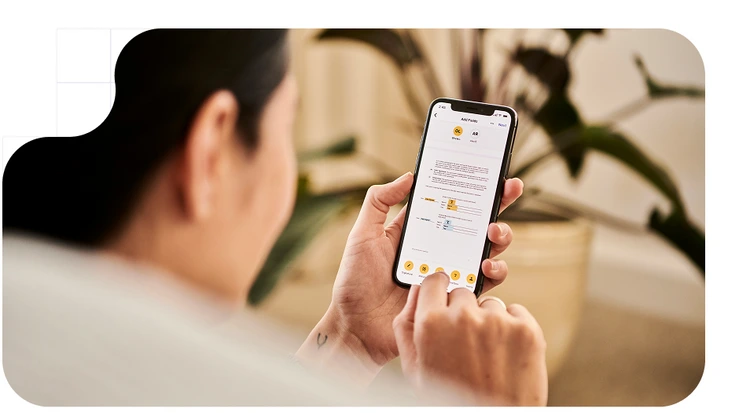
The combination of KYC and electronic signatures is the driving force behind instant digital contracting.
The traditional method:
- A company (e.g., a bank) wants to register a customer online.
- Law 10/2010 on AML requires that customer to be reliably identified using KYC.
- eIDAS requires a valid signature on the contract.
This method breaks the flow: the customer fills out an online form, then goes to an office to identify themselves with their ID (KYC) and signs the contract (handwritten signature).
In contrast, the modern flow, thanks to technology, combines these steps into a 3-minute process:
- KYC identification: the customer starts the process from their mobile phone. The platform activates a video identification. They show their ID card to the camera and record their face. An AI system and a qualified agent (SEPBLAC requirement in Spain) verify the document and biometrics in real time.
- Evidence generation: the system generates a KYC evidence package (video, validated ID card, biometrics).
- Signature: Immediately after KYC approval, the platform generates the contract and displays it to the customer.
- Binding: the customer signs. This signature is an AdES where the evidence collected in the KYC is used to meet eIDAS requirements.
The result is instant hiring: a legally verified customer and a signed contract with high evidentiary strength, all in a single digital flow.
Digital KYC/AML Onboarding In Spain and Electronic Signatures: Contracting
Digital onboarding in Spain is a dual regulatory compliance battleground: SEPBLAC and eIDAS.
- SEPBLAC (AML/KYC): for "obligated entities" (banks, insurance companies, FinTechs, crypto, etc.), Law 10/2010 on the Prevention of Money Laundering is the main regulation. This law requires the application of Due Diligence (KYC) measures. SEPBLAC, as the supervisor, authorizes remote identification procedures. The standard authorized method is video identification. Therefore, any regulated digital onboarding in Spain must use a KYC video system.
- eIDAS (Signature/Contracting): once the customer has been identified in compliance with SEPBLAC, the contract must be signed in compliance with eIDAS.
A first-rate digital onboarding solution must solve both challenges simultaneously. The contracting flow must be designed so that the output of one process is the input of the next.
The dual compliance flow:
- Start: the customer accesses the registration process.
- Phase 1: AML/SEPBLAC compliance: Video Identification is performed and AML checks are carried out (PEP lists, Sanctions, Beneficial Ownership).
- Phase 2: eIDAS compliance: the customer is verified by KYC, presented with the contract, and signs with an Advanced Electronic Signature, biometrically linked to the video session, or with a Qualified Electronic Signature.
The QES represents the maximum synergy here: the eIDAS regulation explicitly allows the use of video identification as a method for issuing a Qualified Certificate remotely.
This allows for the most robust flow possible: Video KYC > QES certificate issuance > Contract signing with QES. This instant contracting has the same legal validity as if the customer had gone to a notary.
The combination of KYC in Spain and electronic signatures is not a trend; it is the gold standard of digital contracting. It allows companies to comply with strict Spanish regulations while offering their customers what they demand: highly secure, instant, and 100% mobile experiences.
All the details about the types, levels, and formats of electronic signatures in our guide
Download it for free here