









Index
- What is an ID wallet and what is a digital identity wallet used for?
- How ID wallets or digital identity wallets work
- Why are ID wallets important for European digital identity?
- Regulatory framework for ID wallets: eIDAS 2.0 and the EUDI Wallet
- Use Cases for ID Wallets in Key Companies and Sectors
- Data Protection and Privacy in a Digital ID Wallet
- How ID wallets reduce friction in digital identification processes
'/%3e%3cpath%20d='M13.6641%205.76325L30.0315%2018.448M50.9456%205.30859L31.8502%2019.8575L30.0315%2018.448M13.6641%2031.6784L30.0315%2018.448'%20stroke='white'%20stroke-width='2'%20stroke-linecap='round'%20stroke-linejoin='round'/%3e%3cpath%20d='M34.5781%2017.582L50.9456%2031.2216'%20stroke='white'%20stroke-width='2'%20stroke-linecap='round'%20stroke-linejoin='round'/%3e%3cdefs%3e%3clinearGradient%20id='paint0_linear_137488_197253'%20x1='12.75'%20y1='5.60216'%20x2='38.5997'%20y2='41.6392'%20gradientUnits='userSpaceOnUse'%3e%3cstop%20offset='0.161458'%20stop-color='%23FF8066'/%3e%3cstop%20offset='1'%20stop-color='%237756DB'/%3e%3c/linearGradient%3e%3c/defs%3e%3c/svg%3e)
The best content in your inbox
Digital transformation has redefined the way we interact with businesses, governments, and online platforms. In this context, the ID wallet has emerged not only as a technological innovation but as a fundamental necessity to ensure the privacy, security, and sovereignty of user data.
If you’re wondering what an ID wallet is, how it works technically, or why the European Union is driving its widespread adoption through the European Digital Identity Wallet (EUDI), this comprehensive guide takes an in-depth look at all aspects of the digital identity wallet.
Digital identity wallets (ID wallets) are the cornerstone of the new online ecosystem. They allow you to verify your identity in seconds, share only the data strictly necessary, and regain full control over your privacy. All of this is backed by the new European eIDAS 2.0 regulation.
Request information about the new ID Wallets and check your customers
Request a free demoWhat is an ID wallet and what is a digital identity wallet used for?
An ID wallet, or digital identity wallet, is a software application designed to securely store, manage, and share a user’s digital credentials and identities. It works similarly to a physical wallet where we keep our ID, driver’s license, or bank cards, but operates in a cryptographic and decentralized environment.
From a technical standpoint, a digital ID wallet acts as a secure container on the user’s mobile device (or in the cloud) that interacts with credential issuers and identity verifiers. It allows you to verify your identity in real time without revealing unnecessary data, ensuring secure and frictionless digital interactions.
Main Uses of a Digital Identity Wallet
The fundamental purpose of an identity wallet is divided into three main areas to reduce digital friction and ensure secure interactions in the new online ecosystem:
- Identification: Allows users to prove who they are in digital and physical environments without needing to present paper documents.
- Authentication: Replaces or complements traditional passwords, enabling secure access to corporate, banking, or government platforms through biometric verification linked to the wallet.
- Credential Sharing: Facilitates the selective, real-time presentation of specific attributes (such as being over 18, holding a college degree, or having a verified bank account).
A digital ID wallet is not simply a digital version of your physical wallet; it is a decentralized cryptographic container. It allows you to verify your identity in real time without revealing unnecessary data, ensuring secure and frictionless digital interactions.
How ID wallets or digital identity wallets work
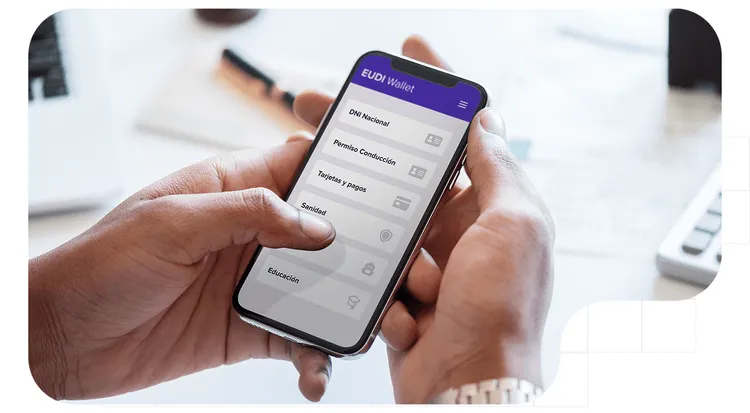
The operation of an identity wallet ecosystem is based on the "Trust Triangle," an identity architecture model involving three key actors in the process. On one side is the issuer, a trusted entity (such as the police, a university, or a bank) that issues data about a user; on the other side is the holder, who receives the data and stores it cryptographically in their ID wallet.
The third pillar is the verifier, which acts as the external service that needs to verify a piece of data. To ensure this happens securely, the wallet generates a cryptographic proof that the verifier validates without ever having to contact the original issuer, thereby guaranteeing the privacy of the process.
Digital credentials, identity verification, and user control
The technological cornerstone of ID wallets is verifiable credentials. These digital credentials are cryptographically signed, ensuring they have not been altered since issuance and that they legitimately belong to the holder.
Digital identity wallets return control of the data to the user thanks to the Self-Sovereign Identity (SSI) model through the following key steps:
- Receipt of credentials: The user obtains the attributes verified by the issuer.
- Encrypted storage: The data resides securely and encrypted directly on the user’s local device.
- Explicit decision: The holder explicitly decides what to share, with whom, and when the information is transmitted.
The Self-Sovereign Identity (SSI) model breaks the data monopoly held by big tech companies. By storing encrypted credentials on the device, the user is the sole owner and decision-maker regarding their information.
Differences Between ID Wallets, Identity Wallets, and Other Digital Identity Systems
The main difference between an ID wallet and traditional systems (such as SSO) lies in storage. While the latter centralize your information, digital wallets are fully decentralized, giving you back control and absolute sovereignty over your data.
In terms of security and privacy, centralized systems pose a high risk because if the database is hacked, millions of credentials are exposed, whereas ID wallets eliminate security breaches through cryptographic validation without central servers.
Furthermore, unlike physical IDs or SSO, which expose all your data and track you, the digital wallet supports selective disclosure, allowing you to share only the information strictly necessary.
Finally, in terms of interoperability, private systems and physical documents are geographically limited, whereas an identity wallet uses open standards to ensure global validity in any borderless digital environment.
| Feature | ID Wallet | Traditional Systems (SSO) | Physical ID (ID Card) |
|---|---|---|---|
| Data Storage | Decentralized. Stored locally on the user’s device or in an encrypted cloud controlled by the user. | Centralized. Data resides on the servers of Big Tech companies. | Physical. Risk of loss or damage. |
| Privacy Control | High. The user decides what to share. Supports selective disclosure. | Low. The intermediary platform knows where and when you connect. | None. By showing your physical ID, you reveal all your personal information. |
| Risk of Security Breaches | Low. There is no central "honeypot" (massive database) that hackers can attack. | High. If the central database is hacked, millions of credentials are exposed. | Medium. Physical document forgery. |
| Interoperability | High. Based on open standards (W3C, OpenID4VC). | Limited to the provider company’s ecosystem. | Limited by geographic boundaries and manual methods. |
Adapt to eIDAS 2.0 and the EUDI Wallet without complications
Download free ebookWhy are ID wallets important for European digital identity?
ID wallets represent the future of trust on the internet. For users, they mean the end of memorizing dozens of passwords and greater control over their personal data. For businesses, they mean a drastic reduction in customer acquisition costs, mitigation of identity theft fraud, and automated regulatory compliance.
European digital identity is embracing this model because it guarantees cross-cutting benefits:
- Superior user experience (UX): Enables 1-click transactions with the same legal validity as in-person interactions.
- Reduction in corporate fraud: Companies rely on credentials already verified by official sources, eliminating the cost of repetitive checks.
User empowerment: It means no more memorizing dozens of passwords and gives users control over their personal data.
Current challenges of digital identity and how ID wallets solve them
Currently, the digital ecosystem faces systemic challenges that cost the global economy billions, such as synthetic identity fraud and massive data breaches. Digital ID wallets address these problems at their root by offering technological solutions that protect user information and permanently secure access:
- End of "password fatigue": The current fragmentation forces users to create different profiles for each website. ID wallets allow for the reuse of verified data, eliminating redundant registration processes.
- Elimination of centralized silos: Since there is no massive central database (like those of Google or Facebook), cybercriminals lose the incentive to attack.
- Secure local validation: Authentication takes place on the user’s own device using local cryptographic tests, without sending passwords over the network.
Regulatory framework for ID wallets: eIDAS 2.0 and the EUDI Wallet
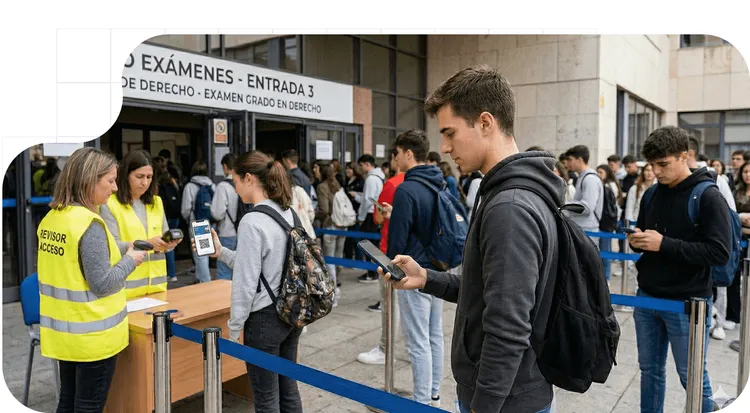
The main global driver for the adoption of digital wallets is the European Union through the eIDAS 2.0 Regulation. This regulatory update requires each Member State to provide its citizens with an EUDI Wallet (European Digital Identity Wallet).
This EUDI Wallet is a standardized, interoperable digital identity wallet across Europe that allows for cross-border identification with full legal validity throughout the EU, requiring large online platforms (VLOPs), banks, and the energy sector to accept it as an official authentication method and integrating qualified electronic signatures (QES) directly from mobile devices.
The eIDAS 2.0 Regulation marks a turning point in European digital trust. The EUDI Wallet will not only facilitate citizen mobility but will also be mandatory for banks, the energy sector, and large online platforms.
Use Cases for ID Wallets in Key Companies and Sectors
The adoption of a digital ID wallet transforms traditional workflows into frictionless digital experiences across multiple industries. In financial services (Banking and Fintech), it enables instant KYC onboarding where customers open accounts in seconds by sharing verified credentials from their wallet, also streamlining mortgage signing and PSD2 authentication. Similarly, in e-commerce, it enables password-free checkout to reduce cart abandonment and perform age verification for restricted purchases while preserving real identity.
Furthermore, its implementation in the public sector ensures secure access to medical records, job portals, or tax payments without the need to install cumbersome local certificates. Additionally, for Human Resources departments, it offers a huge advantage by facilitating the rapid and unquestionable verification of academic credentials and replacing physical cards for access to corporate offices.
Data Protection and Privacy in a Digital ID Wallet
The design of an identity wallet incorporates the concept of "Privacy by Design," strictly complying with regulations such as the GDPR through disruptive innovations like selective disclosure, supported by cryptographic technologies such as Zero-Knowledge Proofs. Thanks to these algorithms, the application generates a "token" or mathematical proof that simply confirms a specific piece of information (such as "this user is of legal age") to the verifier, hiding the rest of the personal information and drastically minimizing data exposure compared to the use of a traditional physical ID.
How ID wallets reduce friction in digital identification processes
The profitability and success of digital services depend largely on their ease of use. While current authentication methods often act as barriers that frustrate users, the adoption of a digital identity wallet is revolutionary.
ID wallets eliminate friction in digital processes in the following ways:
- Instant digital onboarding: By using a pre-verified identity, users avoid filling out lengthy forms or undergoing repeated biometric scans for each new service.
- KYC and AML automation: The wallet’s native integration with Know Your Customer (KYC) and Anti-Money Laundering (AML) processes allows companies to verify backgrounds in real time. In this regard, having advanced platforms like Tecalis Identity—which offer digital identity management with biometric verification and remote onboarding—enables companies to adapt to these new decentralized standards quickly and securely.
- Mobile Qualified Electronic Signature: Processes that used to take days (such as signing insurance or employment contracts) are now completed in minutes directly from a mobile device. This is enhanced by integrating with solutions like Tecalis Sign, which allow for the application of a biometric seal to ensure maximum legal validity, irrevocably linking the document’s signature to the user’s verified identity.
- Reduced abandonment rates: This dramatic improvement in user experience (UX) translates into higher conversion rates for businesses, while simultaneously strengthening their security measures and legal compliance.
Understanding what an ID wallet is the first step in preparing for the imminent change in the global digital ecosystem. With the arrival of the EUDI Wallet and the European digital identity framework, citizens and businesses are moving toward an internet where trust, privacy, and immediacy finally go hand in hand.
Frequently Asked Questions (FAQs)
- Why are ID wallets important for businesses? They drastically reduce onboarding costs and mitigate identity theft through cryptography. Additionally, they automate regulatory compliance by using credentials already verified by official sources.
- Is the EUDI Wallet mandatory for citizens? No, its use will be entirely voluntary for European citizens, although Member States are required to provide it. However, essential services such as banking and major platforms will be required to accept it.
- How does a digital identity wallet reduce friction? By allowing the reuse of already verified credentials, it eliminates the need to fill out repetitive forms. This streamlines digital onboarding and drastically reduces drop-off rates.
- What are Verifiable Credentials in an ID wallet? They are cryptographically signed digital attributes (such as a college degree or your age). They guarantee to the verifier that the information is legitimate and has not been altered since its issuance.
- What is selective disclosure in a digital identity? It is a privacy technology that allows users to prove a specific piece of information without having to reveal the rest of their personal data.
Discover how to benefit from regulatory changes with a Tecalis expert
Request a free session