





Index
- What Is a Sales Funnel and Why Is It Important?
- How to Build a Sales Funnel Step by Step
- Stages and Phases of a Sales Funnel
- TOFU, MOFU, and BOFU: What to Consider at Each Stage
- Software and the best tools for building a funnel that helps you sell more

The best content in your inbox
A sales funnel is a visual and strategic representation of the multiple stages a user goes through from the moment they discover a brand until they become a paying customer. Optimizing a sales funnel requires alignment between marketing and sales teams, along with the implementation of advanced technologies such as digital onboarding platforms, KYC/AML systems, electronic signatures, and customer hubs to reduce friction, improve the user experience, and maximize the conversion rate at each stage.
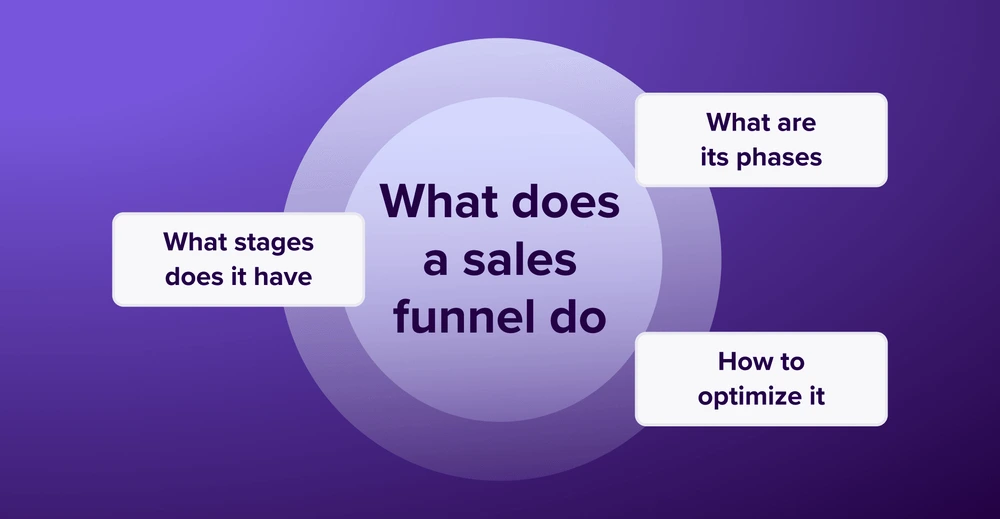
Understanding buyer psychology is no longer enough to ensure a company’s growth. Today, to truly scale, it’s imperative to master the conversion funnel. Throughout this article, we’ll explain what it is, how to build it, the tools needed for each phase, and how technology can prevent you from losing customers at the last second.
Tecalis technology optimizes every phase of your sales funnel
Request a demoWhat Is a Sales Funnel and Why Is It Important?
The sales funnel is a marketing and sales model that illustrates the journey a potential customer takes toward purchasing a product or service. It’s called a “funnel” because, at the top (where users who are just learning about the brand enter), the volume of people is very large. As these users move through the qualification, consideration, and decision-making stages, the number gradually decreases, leaving only those who ultimately make a purchase and become customers at the narrowest part of the funnel.
In practice, “sales funnel,” “sales pipeline,” and “conversion funnel” are used interchangeably: the first describes the stages of the sales process, while the second focuses on the percentage of users who move from one stage to the next.
Having a well-structured sales funnel is not exclusive to e-commerce companies. Its importance lies in the fact that it provides a measurable and scalable framework:
- In B2B and SaaS companies: A sales funnel allows you to forecast revenue, identify friction points in long sales cycles, and pinpoint exactly where leads lose interest.
- In telecommunications, banking, and insurance companies: The funnel is critical because regulations and the need for trust require multiple verification steps. A technology-optimized funnel minimizes friction and prevents abandonment.
- In retail and omnichannel environments: It connects physical interactions (such as in-store visits) with online channels, creating a unified conversion funnel.
Without a defined sales funnel, companies are flying blind. They invest budget in lead generation without understanding why deals aren’t closing.
The greatest strategic risk in a sales funnel is funnel leakage: the loss of qualified leads caused exclusively by operational friction or slow processes. To mitigate this, leading businesses have evolved the linear conversion funnel into a cyclical model. In this system, a flawless end-customer experience serves as the engine to feed back into the initial attraction phase through referrals and retention.
How to Build a Sales Funnel Step by Step
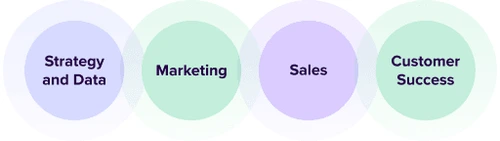
Building a high-performance sales funnel is not a one-off effort, but rather the result of seamless coordination among a company’s various pillars. The success of a modern conversion funnel lies in breaking down corporate silos and embracing Smarketing (the strategic alignment between Sales and Marketing), always including the technical department. For the system to function—capturing, qualifying, and converting leads in an automated and scalable manner—each area must fulfill a specific role within the customer journey architecture:
- Strategy and Data Analysis: Before implementing any tactics, this committee maps out the ideal customer journey. It is responsible for defining buyer personas, establishing business objectives, and setting the KPIs that will measure success at each stage of the sales funnel.
- Marketing Team: This team focuses on the top of the funnel (TOFU). Its primary mission is to generate demand and visibility through SEO campaigns, advertising, and valuable content. Its goal is fulfilled by nurturing and delivering prepared prospects, known as MQLs (Marketing Qualified Leads).
- Sales Team: Takes the lead in the middle and bottom of the funnel (MOFU and BOFU). They receive qualified leads and use consultative selling methodologies, personalized demos, and strategic negotiation to address questions, overcome objections, and close the deal.
- IT and Revenue Operations: They are the behind-the-scenes technology architects. Their role is to integrate CRMs, automate data flows, and implement critical platforms (such as digital onboarding, KYC software, and electronic signatures) so that technology eliminates friction throughout the entire process.
- Customer Success: They step in immediately after the sale is closed. They ensure a smooth adoption of the product or service, guarantee user satisfaction to prevent churn, and identify early opportunities for expansion and customer loyalty.
The design of this sophisticated corporate machinery does not end with its initial launch; rather, it requires ongoing audits and A/B testing. Only through this synergy between human talent, structured processes, and advanced technology can a company establish a sales funnel capable of generating a predictable, scalable, and market-resilient revenue stream.
Stages and Phases of a Sales Funnel
Understanding the general theory behind a sales funnel is just the starting point. The true competitive advantage lies in the tactical execution and technological optimization of each of its stages. As a user progresses from complete anonymity to becoming a repeat customer, their needs, levels of trust, and psychological barriers change dramatically. For corporate teams to manage this journey profitably, predict user behavior, and avoid the dreaded loss of revenue, it is essential to structure the process into clearly defined phases. Each stage of the buying cycle requires a distinct sales approach, specific metrics, and a software ecosystem capable of eliminating any operational friction.
To effectively manage each phase, a marketing and sales team needs at least six layers of tools: analytics, SEO, and advertising to attract; marketing automation and smart forms to capture data; a CRM or customer hub to manage leads and offers; digital onboarding platforms with KYC and AML to verify; electronic signatures to close deals; and post-sale tools to retain customers. When connected, they form an automated conversion flow in which no data is lost between stages.
Below, we explain in depth all the critical phases that make up a conversion funnel and the technology associated with each one to ensure business success.
Acquisition or Attraction
The acquisition or attraction phase represents the first point of contact within any sales funnel. At this initial stage, the strategic goal is not to force an immediate sale, but rather to generate maximum visibility, spark curiosity, and get an anonymous user to identify your brand as the ideal solution to a need or problem they’ve just discovered.
To ensure a steady, high-quality flow of leads into this conversion funnel, the most innovative companies are moving away from relying exclusively on traditional channels. Today, the integration of physical and digital strategies supported by advanced technology allows companies to capture a potential customer’s attention at exactly the right moment, initiating their journey as follows:
- Interactive self-service kiosks: In brick-and-mortar settings (such as retail stores, telecom shops, or bank branches), interactive terminals capture attention by offering visual and intuitive experiences. Through these touchscreens, users can browse a catalog, scan a QR code, or enter their basic information, instantly and automatically gaining access to the company’s digital ecosystem.
- Phygital and omnichannel strategies: Eliminating friction between the physical and online worlds is key to fueling the sales funnel. By connecting the in-store experience with follow-up digital campaigns, brands ensure that prospects don’t disappear after leaving the store and move toward qualification.
- Content marketing and inbound automation: In a strictly digital environment, search engine optimization, technical articles, webinars, and hyper-targeted advertising campaigns act as magnets. Using automation technology to offer lead-generation resources (free materials in exchange for an email address) guarantees a steady stream of visitors ready to be guided by the sales team.
Interest and Qualification
Once attention has been captured, the user moves on to the interest and qualification phase—a critical point in the sales funnel where they evaluate the solution offered while the company identifies genuine potential buyers. Here, data collection is vital through smart forms integrated directly into digital onboarding systems. These programs go beyond traditional static questionnaires, using conditional logic to adapt questions in real time. Thus, the software pre-qualifies the prospect by extracting strategic information about their profile, urgency, and purchasing power, without creating friction or causing drop-offs in the sales funnel.
With this valuable information already captured, the success of the conversion funnel depends on how the sales team manages these opportunities using business support systems (BSS) and centralized customer platforms. These operational tools act as a unified command center, allowing agents to conduct in-depth prospecting and generate hyper-personalized offers from a single dashboard. Instead of wasting resources on cold calls, the sales team can immediately see the actual level of interest for each opportunity, applying precise qualification that drastically accelerates the customer’s path to a final decision.
In addition, an agent portal enables the entire sales network (stores, distributors, and call centers) to work with the same offers, eligibility rules, and customer data. With a lead scoring system that rates each prospect based on their profile and behavior, the sales team prioritizes those most likely to make a purchase and manages leads without duplicating efforts.
Centralize the management of your sales prospects with Tecalis technology
Discover Tecalis Customer HubDecision and Evaluation
In the decision phase, the prospect is ready to buy but is comparing the latest options on the market. At this critical point in the sales funnel, the deciding factor isn’t just price, but trust and responsiveness. Here, digital onboarding tools ensure the final push through the conversion funnel by providing:
- A quick and seamless sign-up process, with no need to download external apps or go through bureaucratic procedures, which ensures a direct competitive advantage.
- Platforms that guarantee data protection and immediate regulatory compliance to eliminate any psychological barriers or perception of risk within the sales funnel.
- Validation systems 100% optimized for mobile phones that allow users to confirm their selection instantly, with total convenience, and from any location.
- Contracts and terms clearly displayed without interrupting the visual experience of the interface, to prevent premature abandonment and accelerate the purchase decision.
Every field that can be auto-filled by scanning an ID using OCR and every screen that is eliminated reduces friction at this stage. That’s why customer onboarding should be designed as part of the sales process—not as a separate step afterward.
If a user decides to sign up for a financial service or a corporate telecommunications plan, they will assess how complex the process will be. A seamless, transparent, error-free digital onboarding process—one that doesn’t require installing third-party apps and conveys institutional security—is often the deciding factor in the user’s choice of your company over the competition. Technology here must eliminate any cognitive friction.
Action or Close
This is the pinnacle of the conversion funnel: the exact moment when the prospect decides to sign a contract or make a purchase. However, it is precisely in the action phase where operational errors prove most costly to the business. Losing a potential customer—who is already fully prepared to close a deal—due to bureaucratic processes, slow paperwork, or technical system failures represents the greatest risk of churn at the bottom of the funnel.
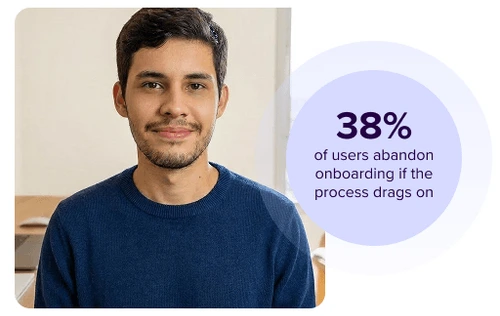
Industry data confirms this: a Deloitte study on retail banking, reported by Frecuencia Money in June 2026, indicates that 38% of new customers abandon the onboarding process midway if it takes too long.
In regulated and corporate sectors, closing a deal isn’t as simple as clicking a “buy” button. To prevent customers from abandoning the process just seconds before conversion, the action block must be the most agile and optimized part of the entire sales funnel. The ultimate solution lies in integrating verification and contract technology directly into the natural flow of business, ensuring a seamless user experience and strict regulatory compliance through the following tools:
- Electronic Signature Integration: Requiring a customer to print, physically sign, and scan a contract significantly increases the risk of abandonment. Implementing simple or advanced electronic signature software, natively integrated into the process, allows the user to formalize the legal agreement from their mobile device in just a few seconds—with a tap or via a one-time password received via text message.
- KYC Systems for Identity Verification: Within the same onboarding workflow, it is essential to reliably confirm the customer’s identity. The incorporation of biometric tools allows users to photograph their ID and perform a quick facial liveness check, validating their information in real time without leaving the platform.
- AML systems for fraud prevention: Acting as an automated security filter distinct from the previous step, the technology cross-checks customer data against international watchlists to prevent money laundering and fraud. This ensures that the company instantly complies with the strictest regulations before approving the completion of the transaction.
- Seamless and Uninterrupted Orchestration: The real secret to high conversion rates is technical integration. If the validation process, risk prevention, and signing operate as fragmented steps, the customer becomes frustrated. By unifying all these tools into a single, seamless, and automated workflow, the customer moves from intent to legal action in less than three minutes, maximizing the overall effectiveness of the sales funnel.
Orchestration means that a single configurable workflow links the form, KYC, AML, and signature using conditional rules, saves progress if the user is interrupted, and functions identically on the website, at a kiosk, at the point of sale, or on the customer’s cell phone. The Ibercaja-Pensumo case illustrates this: by integrating KYC and digital signatures into an instant registration process, their conversion rate increased by 96%. To measure success, it’s best to track three metrics: workflow completion rate, average time to sign up, and abandonment rate at each step.
Loyalty and Follow-Up
The strategic journey through the sales funnel does not end with the signing of the contract, as the true profitability of any business lies in its operational capacity to retain customers and increase their long-term lifetime value. In this retention phase, excellent after-sales service is essential for transforming a one-time transaction into a lasting business relationship.
To achieve this level of efficiency and minimize future acquisition costs, it is essential to centralize the complete customer history in an advanced customer hub. This tool provides a unified and transparent view of the customer, enabling support and retention teams to anticipate the market’s actual needs.
Through this data orchestration, highly precise cross-selling and service expansion strategies can be automated and personalized. In this way, the conversion funnel consolidates its financial success and feeds back into initial customer acquisition, transforming satisfied buyers into loyal advocates who ensure a stream of recurring revenue.
Some specific post-sale actions include a self-service customer portal for managing changes and renewals, cross-selling offers based on purchase history, and automatic reminders before an expiration date.
TOFU, MOFU, and BOFU: What to Consider at Each Stage
For industry professionals, the conversion funnel is often divided into three strategic levels that determine the adoption of tools based on the user experience. Understanding the cognitive and operational needs at each of these stages is vital to preventing potential customers from dropping off prematurely.
- TOFU (Top of the Funnel – Attraction): This is the initial discovery phase. Here, the experience must be visual, immersive, and free of barriers to entry. Users are not looking for long-term commitments, so tools such as self-service kiosks or digital signage must offer highly intuitive interfaces, clear call-to-action buttons, and instant responses.
- MOFU (Middle of the Funnel – Consideration): This corresponds to the qualification stage. The user experience must focus on personalization and clarity of information. When interacting with registration forms or centralized customer platforms, the technology should auto-fill data and save progress, making the prospect feel that the company understands their specific needs without overwhelming them.
- BOFU (Bottom of the Funnel – Decision and Closing): This is the final stage of the sale. Here, ease of use is a matter of survival for the business. Digital tools for identity verification and contract signing must be designed for maximum convenience on mobile devices. The steps should be minimal and transparent, reducing buyer anxiety to ensure the success of the sales funnel.
Ensuring a seamless and uninterrupted transition from TOFU to BOFU is what distinguishes a profitable business model from an inefficient one. If the technology does not support the customer’s psychological journey throughout the entire sales funnel, the budget and effort invested in customer acquisition will be irretrievably lost just before the deal closes.
A practical approach is to measure the experience at each stage using its own metric: interaction and bounce rate in TOFU, form completion in MOFU, and time to conversion and drop-off in BOFU.
| Stage | Objective | Key Tools | KPIs to Measure |
|---|---|---|---|
| Acquisition or Attraction (TOFU) | Generate visibility and initial contacts | SEO and content, advertising, digital kiosks and signage, inbound automation | Qualified traffic, cost per lead (CPL) |
| Interest and Qualification (MOFU) | Identify actual buyers | Smart forms, lead scoring, customer hub / BSS, CRM | MQL-to-SQL conversion rate, form completion |
| Decision and evaluation (MOFU-BOFU) | Reduce perceived risk and stand out | Digital onboarding without apps, visible compliance, personalized offers | Accepted proposals, decision time |
| Action or close (BOFU) | Close the sale without drop-offs | Biometric KYC, AML controls, electronic signature, workflow orchestration | Final conversion, drop-off at closing, onboarding time |
| Retention and follow-up | Retain and increase customer value | Customer hub, customer portal, cross-selling, post-sale automation | Retention, lifetime value (LTV), cross-sell revenue |
When designing the user experience in your sales funnel, always prioritize a mobile-first approach, especially at the BOFU stage. A significant portion of drop-offs in the final phase are due to onboarding, validation, or signing systems that require the use of desktop computers or feature complex interfaces that completely disrupt the buyer’s workflow.
Software and the best tools for building a funnel that helps you sell more
Designing a profitable sales funnel today goes beyond simple theoretical strategies. It requires building a seamlessly integrated technological environment. True optimization of a conversion funnel relies on identifying operational bottlenecks and eliminating them through automation, ensuring that prospect information flows uninterrupted from the first contact to the final transaction.
To achieve this goal and increase sales, the orchestration of tools is non-negotiable. The combination of self-service kiosks for initial lead capture, centralized customer management platforms for in-depth qualification, and high-tech digital systems with native identity validation forms the definitive infrastructure that transforms slow processes into exceptional experiences.
Although precise monitoring of the sales funnel benefits any business model, there are sectors where having exact traceability and secure onboarding tools becomes both a legal and competitive necessity. Key industries that require this level of sophistication include:
- Telecommunications sector: Where high user turnover demands highly agile onboarding processes and instant systems to activate lines or services in a matter of minutes.
- Banking and financial services: Institutions operating under strict fraud prevention regulations, where closing a deal requires secure biometric validations without sacrificing business efficiency.
- Insurance industry: Which needs to manage a massive volume of policy issuance, facilitating the remote signing of complex contracts without requiring the policyholder’s physical presence.
- Retail and real estate: Long sales cycles where automated tracking and a frictionless legal closing set companies apart from the competition.
- Energy and utilities: Massive supply contracts, where a streamlined and verified sign-up process reduces dropouts and fraud during activation.
Implementing this suite of software solutions and mastering every aspect of your sales funnel is the definitive step toward scaling revenue. By aligning corporate teams with the right technology, closing a sale ceases to be a grueling effort and becomes the natural outcome of a seamless process.
Frequently Asked Questions (FAQs)
- What are the stages of a sales funnel? A sales funnel has five stages: acquisition or attraction, interest and qualification, decision and evaluation, action or close (conversion), and retention and follow-up. These are grouped into three levels: TOFU, MOFU, and BOFU.
- What does TOFU mean in a sales funnel? It refers to the top of the funnel (TOFU), which focuses on attracting, gaining visibility, and acquiring a large number of users during the discovery phase.
- What is the MOFU phase in a sales funnel? It is the middle of the funnel (MOFU), dedicated to generating interest, fostering consideration, and qualifying leads to identify actual buyers.
- What does AML mean in digital onboarding? It refers to the set of technologies and regulatory controls aimed at preventing money laundering and mitigating fraud in commercial and financial transactions.
- What is a customer hub in sales management? It is a centralized platform that unifies customer data, sales interactions, and prospecting to optimize the work of the sales force.
- What is a self-service kiosk within the omnichannel funnel? It is an interactive terminal in a physical space that allows users to manage their own needs, browse catalogs, and instantly access the company’s digital ecosystem. What is funnel leakage? It is the unintended loss of qualified leads throughout the process, caused by bureaucratic barriers, usability issues, or operational friction.
Automate verification and close sales without friction
Contact one of our experts