








Index
- What Is Customer Experience?
- Why Is the Customer Experience Important?
- Elements That Build a Good Consumer Experience
- Key Strategies for Managing the Customer Experience and Optimizing the Customer Journey
- Tools to Improve the Customer Experience
- Digital Onboarding and Identification: Frictionless Speed
- Transform Your Customer Experience with Tecalis Technology

The best content in your inbox
The product or service you offer is no longer the only factor determining your business’s success. The rules of the game have changed, and today, the customer experience has emerged as the true battleground where brands win or lose market share. Consumers are increasingly demanding; they conduct thorough research before making a decision and expect seamless, secure, and fully personalized interactions from the very first point of contact.
If you’re wondering how to stand out from your competitors and achieve sustained growth, the answer lies in your company’s ability to design a frictionless customer journey. In this article, we’ll explore what customer experience is, why it’s important, and what the definitive strategies and technological tools are for completely transforming your customer experience and turning it into your greatest competitive advantage.
The data confirms it: nearly 60% of consumers would switch to a competitor after just one or two negative customer support experiences. (Source: Zoom Morning Consult, 2025).
Transform the customer experience with identity verification, electronic signature, and omnichannel management technology
Contact UsWhat Is Customer Experience?
The customer experience is the overall set of perceptions, emotions, and interactions that a consumer experiences when engaging with a brand throughout their entire lifecycle, ranging from initial discovery to after-sales service.
It should not be confused with the philosophy that drives it. While the customer experience is the outcome perceived by the customer, being a customer-centric company means organizing strategy, processes, and culture around the customer’s needs. A customer-centric approach is the starting point; a good experience is its measurable result.
In this sense, the customer experience is not limited exclusively to the transactional moment of purchase but encompasses every touchpoint in both the physical and digital environments. These interactions include:
Discovery and research: The initial contact through advertising, blog posts, or intuitive navigation of the corporate website.
Evaluation and registration: The decisive moment of customer onboarding or sign-up, where the ease of identification and account creation sets the tone for the rest of the relationship.
Purchase and Sign-Up: The speed and ease of use in the payment process, or the speed with which a document can be finalized using secure tools.
Support and after-sales service: The company’s efficiency in resolving questions, providing technical assistance, and maintaining long-term value.
Therefore, excellent customer experience management requires breaking down internal barriers and aligning all company departments—from marketing and sales to operations and customer service—under a single vision. The fundamental goal is to ensure that the message, technological efficiency, and personal touch are consistent and exceptional at all times, making every stage of the customer journey not just a mere administrative formality, but a memorable interaction that builds trust in the brand.
Why Is the Customer Experience Important?
Understanding why the customer experience is important is vital to justifying any investment aimed at improving your business. In markets where products and prices are becoming increasingly similar, how you treat your customers becomes your key differentiator. According to Ipsos’ CX Global Insights, 70% of customers choose a brand based on the expectation of having a positive experience. Investing in this area is a highly profitable strategy that directly drives business results and strengthens consumer trust in the long term.
The direct benefits a company gains by optimizing this aspect are:
- Increased retention and reduced churn rate: A customer who enjoys a seamless process—especially during critical stages such as signing up or onboarding—is far less likely to switch to a competitor**. Retaining a customer is always more profitable for a company than acquiring a new one.**
- Loyalty and the creation of brand ambassadors: The consumer experience goes beyond mere one-time satisfaction. When you exceed user expectations, they not only return to purchase your services but also naturally recommend your company to their network, becoming active and organic promoters of your business.
- Competitive advantage and greater willingness to pay: Organizations that lead the market through their customer service succeed in making their customers willing to pay a higher price in exchange for the convenience, efficiency, and security they receive with every interaction.
- Increased cross-selling: A customer who has had a flawless experience during their first purchase is much more receptive to purchasing new or complementary products and services, greatly facilitating business growth within your own user base.
- Reduced operating costs: Investing in refining the customer journey minimizes expenses in the medium and long term. By eliminating friction in registration processes or automating initial contacts, the volume of incidents, complaints, and inquiries reaching technical support is drastically reduced.
- Improving online reputation and digital visibility: Providing excellent service generates a steady stream of positive ratings and reviews. These reviews are continuously processed by search engines and new virtual assistant technologies to recommend your brand as the most trustworthy option compared to other alternatives.
Your customers no longer compare you only to your direct competitors, but to the best digital experiences they encounter in their daily lives. A single point of friction is enough to make them abandon a sign-up or purchase process they thought was a done deal. Today, absolute convenience is the primary driver of conversion.
Elements That Build a Good Consumer Experience
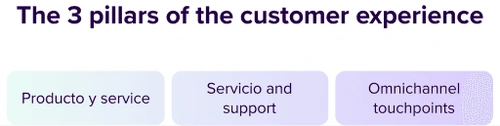
The first fundamental pillar for building a good consumer experience is the product or service itself. This is the non-negotiable foundation upon which any business relationship rests, as the offering must faithfully deliver on the promises made during marketing campaigns. An excellent product or service must be completely intuitive, address a real market need, and maintain impeccable quality standards. However, offering a high-value proposition is insufficient today if it is not accompanied by first-rate customer service in all other interactions with the company.
The second pillar consists of service and support, representing the indispensable human element and direct assistance to the user. This element encompasses all the ways in which the professional team and automated systems interact with the buyer to address their operational needs. Proactivity in anticipating potential setbacks, empathy during direct interactions, and speed in resolving issues are critical factors in ensuring a positive perception. Highly efficient support has the ability to transform a complaint or a technical question into an unbeatable opportunity to build trust and foster long-term customer loyalty.
The third pillar lies in omnichannel touchpoints and the smoothness of the customer journey itself. Users demand seamless interaction across multiple physical and digital channels, expecting to resume their interactions exactly where they left off without ever having to repeat information. Within this journey, two critical processes stand out as key to the success of any business strategy: customer onboarding and subsequent contract signing. If the initial registration requires filling out endless forms, or if agile solutions such as electronic signatures aren’t available to close a deal, the conversion will fail. Therefore, integrating advanced technology into these stages is vital to ensuring secure, legal, and frictionless operations.
The Impact of SaaS Tools on the Customer Experience
Putting these three pillars into practice radically changes how the customer experiences each stage of their journey:
| Stage of the Journey | Traditional Process | With AI-based technology |
|---|---|---|
| Sign-up and registration | Extensive forms, paperwork, and waiting for data validation. | Guided registration in minutes with biometric verification and proof-of-life. |
| Identity verification | Manual document review, with delays of hours or days. | Automated KYC and AML validation in seconds, without human intervention |
| Contract signing | Print, sign on paper, scan, and mail. | Advanced electronic signature, legally valid from any device. |
| Customer service and support | Isolated channels: the customer has to repeat their issue to each agent. | True omnichannel: the case history follows the customer across channels. |
| Outcome for the customer | Frustration, abandonment of the process, and loss of trust. | Trust, conversion, and a memorable customer experience. |
Key Strategies for Managing the Customer Experience and Optimizing the Customer Journey
Customer experience management should not be left to chance or based on intuition; rather, it requires a strategic framework deeply grounded in data. To effectively optimize the customer journey, drive conversions, and ensure that every interaction delivers real value to the user, your company must implement the following fundamental strategies:
- Map the Customer Journey: Design a detailed visual representation of all the phases the user goes through, from the first point of contact to post-sale support. This allows you to understand what your buyer does, thinks, and needs at every exact moment of the cycle.
- Identify and Eliminate Friction Points: Once the map is drawn, it’s vital to detect obstacles that hinder conversion, such as excessive wait times, slow validation processes, or unnecessary paperwork. Eliminating these barriers through digitization is the most critical step toward achieving a seamless flow.
- Foster true omnichannel integration: Ensure that all contact channels—whether in-person, online, via phone, or through mobile apps—are seamlessly interconnected. The consumer must be able to switch platforms without having to restart their process or repeat information to different agents.
- Commit to personalization at scale: Use collected data intelligently to offer hyper-personalized solutions, recommendations, and communications. An individualized and contextual approach makes the user feel valued, dramatically increasing their loyalty to the brand.
- Continuously gather feedback: Implement real-time satisfaction surveys at key moments in the customer journey to hear directly from consumers. Analyzing these metrics allows the company to make agile decisions and correct errors before they have a negative impact.
- Empower internal teams: Equip employees with the necessary technological tools and training to access customer information instantly. A workforce with the right resources is capable of providing proactive, effective, and highly professional customer service.
Successfully implementing all these strategies requires a firm commitment from management and the full involvement of every corporate department. The true leap in quality occurs when this organizational vision is backed by the right technology to efficiently digitize every new interaction.
Discover how Orange and Ibercaja-Pensumo have succeeded in digitizing their customer experience
View Success StoriesTools to Improve the Customer Experience
The theory behind interaction management is essential, but it’s impossible to execute it properly without the right technological support. Digital transformation provides modern companies with incredibly powerful solutions to redesign their operational processes. Below, we analyze the essential technologies that any organization must implement to revolutionize its competitiveness and enhance brand perception.
Channel Management and First-Contact Automation
Achieving true omnichannel consistency requires robust platforms that unify business information. Advanced tools such as a Customer Hub allow interactions to be centralized to orchestrate processes masterfully. By integrating modern management systems with BSS and ERP modules, companies optimize the administration of their sales network. When in-store sales associates, call center agents, and the web portal all access the same database simultaneously, errors are avoided, processes are accelerated, and customers perceive a brand that deeply respects their time.
The automation of the first physical point of contact has also evolved thanks to smart self-service. The deployment of interactive kiosks in physical stores or branches brings all the agility of the digital world to the in-person environment. Through these terminals, users can self-manage their sign-ups, make complex inquiries, or complete purchases independently. This significantly reduces wait times and boosts customer satisfaction from the moment they step into the store. A real-world example is Orange, which, using Tecalis’ self-service kiosks, reduced wait times by 78% and cut lines by 62% during peak hours.
Digital Onboarding and Identification: Frictionless Speed
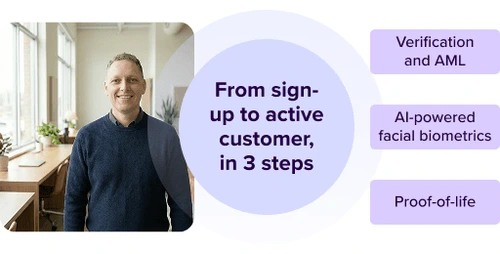
The sign-up process represents the true “moment of truth” in the relationship with any user, so the identification phase must be designed as a highly engaging experience—not as a burdensome bureaucratic obligation. Regulatory compliance requirements used to turn registration into a tedious process that drove up abandonment rates right in the middle of the conversion. Today, next-generation identity verification technologies completely transform this dynamic, making the initial sign-up process agile, fully integrated, and secure thanks to the application of advanced techniques:
- Automated verification and AML processes: These allow a customer’s identity to be verified in just a few seconds, ensuring the strictest regulatory compliance without the need for manual intervention or long waits for document validation.
- Facial biometrics with artificial intelligence: Through advanced facial recognition, users can open a bank account or sign up for a telecommunications service from the comfort of their own home using only their smartphone’s camera.
- Real-time proof-of-life verification: Proof-of-life verification prevents any type of fraud or identity theft, conveying to new customers a brand image that is firmly committed to maximum protection, constant innovation, and technological usability.
The key lies in ensuring regulatory compliance without ever sacrificing user convenience. By implementing a fast, visually integrated KYC process, the company eliminates traditional barriers to entry and ensures that the customer completes their registration with an unbeatable experience.
Electronic Signature for Secure Contract Signing
If the initial registration process successfully attracts the customer, the electronic signature emerges as the ultimate technological tool for closing the deal instantly. Forcing a user to print documents, sign on paper, scan pages, and send physical contracts is a death sentence for conversion in today’s competitive environment. Implementing an advanced electronic signature solution allows agreements to be formalized with full legal validity from any mobile or desktop device, eliminating bureaucratic delays at the source.
The true transformative power in corporate sales is achieved by seamlessly combining both technological innovations. When the KYC validation process and the contract signing are executed simultaneously within the same onboarding workflow, organizations achieve what is known as instant onboarding. In this way, the user verifies their identity and accepts the terms and conditions in a seamless process that takes just a couple of minutes, allowing the company to activate the service in real time and thus ensuring a seamless customer journey that dramatically increases profitability.
Transform Your Customer Experience with Tecalis Technology
Delivering superior customer service requires much more than good intentions; it demands a cutting-edge technological infrastructure designed to ensure maximum security in every interaction. In this highly demanding context, Tecalis positions itself as the ultimate strategic partner to drive your business growth. Integrating our advanced solutions allows you to build a digital, legally compliant, and completely seamless customer journey, setting you apart from your competitors in the market:
- Tecalis Identity for seamless digital onboarding: This solution completely transforms your initial registration process through AI-assisted biometric validation. It allows you to verify your users’ identities in real time while complying with the strictest regulations—all through a highly intuitive interface that reduces the abandonment rate to historic lows.
- Tecalis Sign for instant contract execution: This advanced electronic signature platform ensures that any contract or service agreement is finalized quickly and with full legal validity. Users can complete the process instantly from any device, avoiding unnecessary delays that could dampen their purchase intent at the decisive moment.
Imagine a scenario where a new buyer discovers your brand, verifies their identity with simple facial recognition, and signs the commercial agreement right then and there to receive immediate access to their purchase. This isn’t a promise for the future—it’s an operational reality that’s already within your company’s reach.
Frequently Asked Questions (FAQs)
- What does “customer-centric” mean? “Customer-centric” means “focused on the customer.” It is a business approach—also known as customer centricity—that places the customer at the center of the company’s decisions, processes, and culture.
- How is the customer experience measured? The most common metrics are the NPS (Net Promoter Score, which measures the likelihood of recommending the brand), the CSAT (satisfaction with a specific interaction), and the CES (effort required by the customer to complete a task). These should be supplemented with operational metrics such as retention rate, onboarding drop-off rate, and incident resolution time.
- How can you improve the customer experience during sign-up and onboarding? By reducing steps and wait times: identity verification using biometrics and a “proof of life” check in seconds, along with an electronic signature integrated into the same workflow to enable instant onboarding from a mobile device.
How can you digitize your company’s onboarding, signing, and channel management processes?
Schedule a personalized demo with our experts